Here’s a complete overview of the B.Tech (Bachelor of Technology) course:
🎓 Course Name:
- Bachelor of Technology (B.Tech)
✅ Overview
- Full Form: Bachelor of Technology
- Duration: 4 years (8 semesters)
- Type: Undergraduate degree
- Eligibility: 10+2 with Physics, Chemistry, and Mathematics (PCM)
- Admission Process: Entrance exams (like JEE Main, JEE Advanced, or state-level exams) or merit-based
🎓 Eligibility & Admission
- Educational Qualification: Passed 10+2 (Science stream) with Physics, Chemistry, and Mathematics (PCM)
- Minimum Marks: Usually 50–60% aggregate (depends on the college)
- Entrance Exams:
- National level: JEE Main, JEE Advanced
- State level: WBJEE, MHT-CET, KCET, etc.
- Private universities: BITSAT, VITEEE, SRMJEEE, etc.
💻 Subjects :
Here’s a complete list of common subjects taught in a B.Tech (Bachelor of Technology) course — divided by year and major categories:
- Data Structures and Algorithms
- Object-Oriented Programming (C++/Java)
- Computer Organization & Architecture
- Operating Systems
- Database Management Systems (DBMS)
- Computer Networks
- Theory of Computation
- Compiler Design
- Software Engineering
- Artificial Intelligence / Machine Learning
- Engineering Mathematics
- Physics & Chemistry
- Basic Electrical & Electronics Engineering
🔍 Career Scope & Job Profiles
- Software Developer / Engineer
- Data Analyst / Data Scientist
- Civil / Mechanical / Electrical Engineer
- Network Engineer
- Project Manager
- Automation Engineer
- PSUs: ONGC, BHEL, GAIL, NTPC, ISRO, DRDO (through GATE Exam)
- Civil Services: IAS, IPS, IES
- Banking / Railways / Defense: SSC, UPSC, Indian Railways, Indian Navy, Air Force
💡 Top Reasons to Choose B.Tech
- 1. Strong Career Opportunities :
B.Tech opens doors to well-paying and stable jobs in both private and government sectors. Engineers are always in demand in industries like IT, manufacturing, construction, telecom, and more.
- 2. Practical Learning :
Unlike many theoretical degrees, B.Tech focuses on hands-on learning — labs, projects, and internships help you apply what you learn to real-world problems.
- 3. High Salary Potential :
Engineering graduates often start with higher salary packages compared to many other undergraduate degrees, especially in fields like computer science, data science, and AI.
- 4. Wide Range of Specializations :
You can choose from various branches based on your interest:
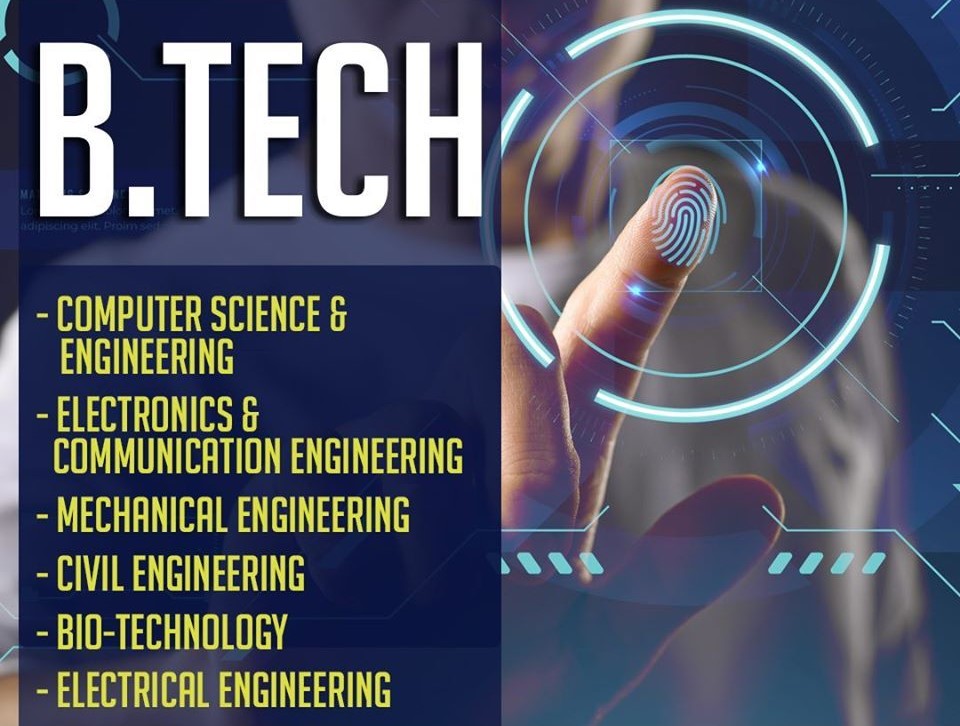
- Computer Science & IT (for tech lovers)
- Mechanical & Civil (for design/building enthusiasts)
- Electrical & Electronics (for gadget/energy fans)
- Biotechnology or Chemical (for science innovators)
- 5. Global Career Scope :
B.Tech is recognized worldwide, and engineers have great opportunities to study or work abroad — especially in countries like the USA, Canada, Germany, and Australia.
💰 Average Salary:
- Fresher: ₹4–8 LPA
- Experienced Professionals: ₹10–40 LPA (depending on skills & company)
- Salary can go up to ₹30 – ₹50 LPA or more in MNCs and product-based companies.
- Tech Leads, Project Managers, and Architects can earn even higher.
- If you work abroad (especially in the US, UK, or Canada):
Starting salaries range from $60,000 – $120,000 per year (₹50 LPA – ₹1 Cr approx).
🌍 Top Recruiting Companies:
After completing B.Tech CSE, you can work in various tech sectors such as software development, data science, cybersecurity, and more.
- Google
- Microsoft
- Amazon
- Infosys
- TCS
- Wipro
- IBM
- Accenture
- Oracle
- HCL